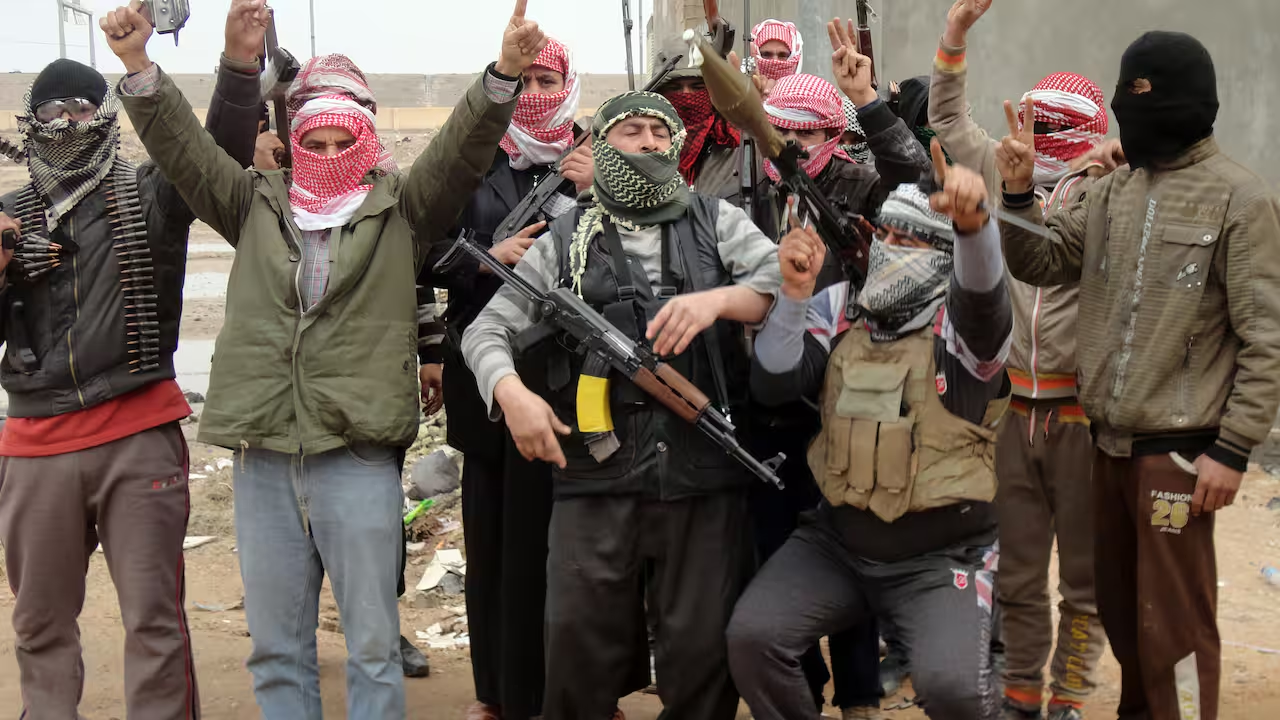
Pentagon,USA: The recent comments by U.S. Africa Command (AFRICOM) chief General Michael Langley underscore growing concerns over the expanding presence of the Islamic State (ISIS) in northern Somalia. According to Langley, ISIS has approximately doubled its numbers in the region over the past year, though precise estimates remain undisclosed. Earlier reports suggested the group had around 200 fighters in the northern part of Somalia, particularly in Puntland. Somali Brigadier General Abdi Hassan Hussein also mentioned that foreign fighters, estimated to be in the hundreds, have entered the area, though these figures are yet to be verified.
The situation with al-Shabab, the al-Qaeda affiliate, remains critical as well. The group continues to benefit from strong recruitment efforts, currently maintaining an estimated 12,000 to 13,000 fighters. Al-Shabab has leveraged diplomatic disputes between Somalia and Ethiopia to boost its influence and numbers, further complicating regional counter-terror efforts.
Meanwhile, a political dispute between Somalia and Ethiopia has hampered collaborative counter-terrorism initiatives. Ethiopia’s involvement in using Somaliland’s Red Sea port of Berbera without Somalia’s consent has heightened tensions, with Somali Prime Minister Hamza Abdi Barre accusing Ethiopia of violating Somalia’s territorial integrity. This political rift has also disrupted coordinated military efforts against al-Shabab, though Langley remains hopeful that future collaboration between Ethiopia and Somalia can be restored.
Al-Shabab continues to launch devastating attacks, including those on civilians in Mogadishu. At the same time, U.S. forces are focusing on helping Somali troops hold reclaimed territories, as the group seeks to reinsert itself in areas like central Somalia, where government forces have struggled to maintain control.
Looking ahead, the African Union Transition Mission in Somalia (ATMIS) is set to withdraw, to be replaced by a new African Union Support and Stabilization Mission in 2025. The role of U.S. forces, according to Langley, will remain limited to advising and assisting rather than direct military engagement.
Lastly, the potential for cooperation between al-Shabab and Iran-backed Houthi militants in Yemen has raised concerns. Such collaboration could escalate tensions in the Gulf of Aden, a vital global trade route, particularly if sophisticated weaponry is introduced into the region.
This complex interplay of insurgent groups, foreign influence, and political strife presents serious challenges for Somalia and its regional partners in maintaining stability and security.
Source VOA