
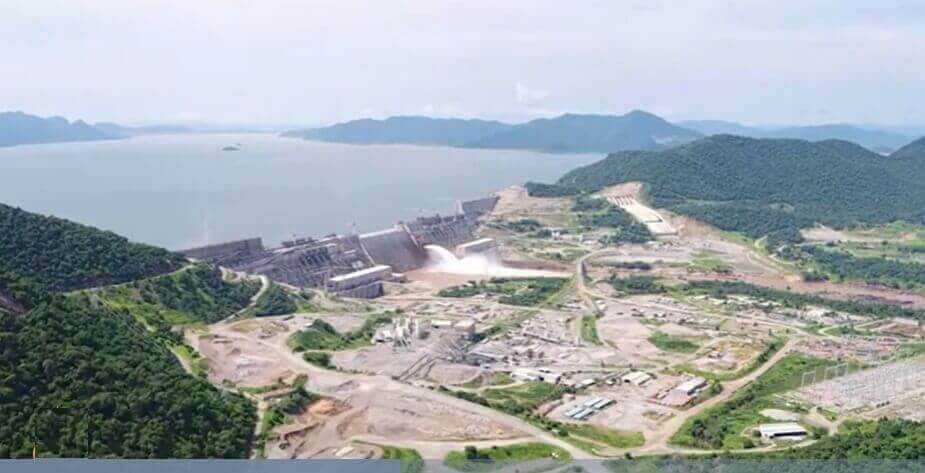
The recent pact signed between Ethiopia and Israel on 4th of February, aimed at enhancing mutual capacity building, knowledge transfer, and particularly, water and energy development, has spurred growing alarm within Egypt. This concern arises from the potential implications for Egypt’s primary source of fresh water – the Nile River – particularly given Ethiopia’s ongoing construction of the massive Grand Ethiopian Renaissance Dam on the Blue Nile, and the historical and current frictions with Israel. These concerns deepen as Egypt’s relations with both these nations continue to deteriorate. In this light, the escalating cooperation between Ethiopia and Israel could be perceived as a calculated move to exert pressure on Egypt amidst its disputes on regional and global stages. Let’s delve deeper into these geopolitical intricacies and their implications for Nile waters’ distribution and Egyptian national security.
Background of Ethiopia-Israel Cooperation
Ethiopia and Israel have a long history of cooperation, demonstrating a nuanced interplay of politics, development, and survival priorities.
Previous Agreements and Collaborations
Historic Cooperation
The ties between Ethiopia and Israel started before the modern state of Israel was established. With Israel’s formation, Ethiopia, despite being a predominantly Christian country, was one of the first African nations to recognize it formally.
The early years of the relationship saw Israel providing assistance in agriculture and human capacity development. There were setbacks along the way; however, the two nations have managed to preserve their relationship and have continued to find areas of mutual benefit and interest.
Sectors of Collaboration
In recent years, the sectors of collaboration have expanded, courting controversy and suspicion from other regional players. The most noteworthy has been in technology transfer, agriculture, and capacity building. However, the areas that have drawn the most attention are their collective efforts in water and energy.
This has raised eyebrows, especially among Nile basin nations such as Egypt and Sudan, who have closely observed the steadily growing rapport between Ethiopia and Israel, with increasing concern.
Details of the Recent Agreement
The recent agreement, signed on February 4th, signals both a continuation of ongoing cooperation and a bold new direction.
Focus Areas: Water and Energy
The main focus areas of the new cooperation deal between Ethiopia and Israel are capacity building, knowledge transfer, water, and energy development. These are not entirely new sectors for collaboration between the two nations, but the scale and scope of the current agreement are unprecedented.
The water and energy aspects of the deal are particularly notable, given their direct link to the contentious Grand Ethiopian Renaissance Dam (GERD).
Signatories and Their Roles
The agreement was signed by Ethiopia’s Minister of Water and Energy, Habtamu Ittefa, and Israel’s Minister of Energy and Infrastructure, Eli Cohen. The roles behind these signatories bring out the priorities prominent in this most recent agreement – capacity building in energy production and securing sustainable sources of water.
Implications for Egyptian National Security
Egypt’s national security could be significantly impacted due to the recent cooperation agreement between Ethiopia and Israel, particularly when considering water as a strategic resource and the regional geopolitical dynamics.
Water as a Strategic Resource
Egypt’s Dependence on the Nile
Egypt’s dependence on the Nile River for fresh water is a critical factor in this context. With an ever-increasing population, the country allocates over 85% of its Nile water share to agriculture. Hence, any threat to the Nile’s flow could directly affect Egypt’s food security and stability. The agreement, which emphasizes water and energy development, can potentially limit Egypt’s access to this life-sustaining resource.
Existential Threat Posed by GERD
The Grand Ethiopian Renaissance Dam (GERD), the centerpiece of Ethiopia’s drive to become a major power exporter, also looms as a significant threat. As the dam is filled, there are grave concerns about the reduced water flow downstream, most notably in Egypt, which relies on the river for as much as 90% of its freshwater. President Abdel Fattah al-Sisi has even labelled the dam a matter of “life and death” for his country.
Regional Geopolitical Dynamics
Ethiopia’s Position and Ambitions
Ethiopia, utilising its position as the main upstream country in the Nile basin, sees the GERD as an assertion of its rights and a symbol of national pride. Addis Ababa further emphasises the development dimensions, seeking to lift tens of millions out of poverty and securing export of electricity. Depending on how the cooperation with Israel materialises, these ambitions could be further solidified, compounding the challenge for Egypt.
Israel’s Strategic Interests
The increased collaboration with Ethiopia helps Israel expand its influence in the region, a strategic foothold in the Horn of Africa. Such geopolitical manoeuvring could be detrimental for Egypt, particularly as the ties between Cairo and Tel Aviv have been tense historically. Thus, the Ethiopia-Israel alliance seen through the lens of national security amplifies Egypt’s concerns. Telegaraf News