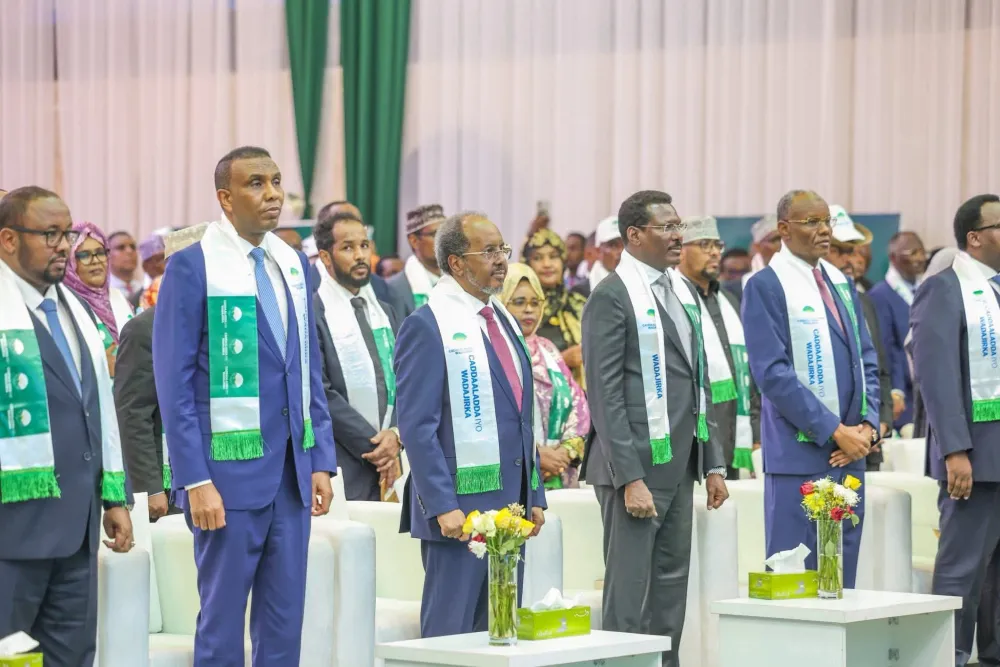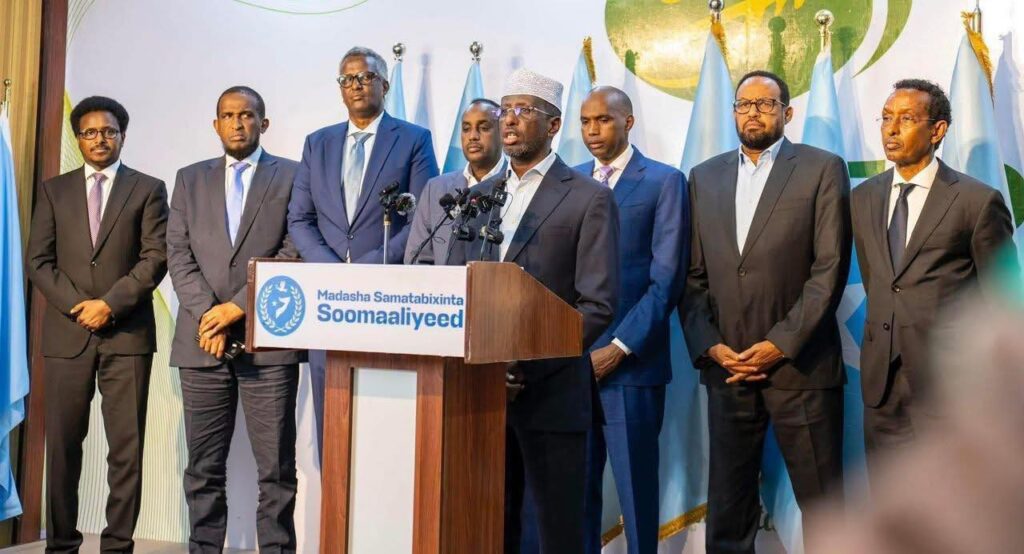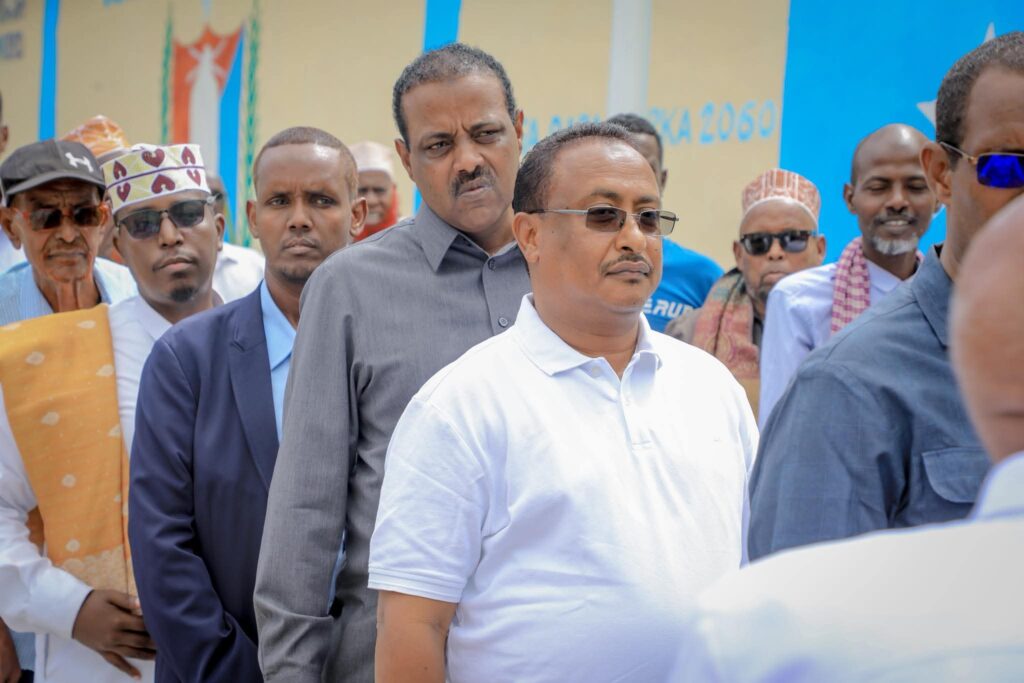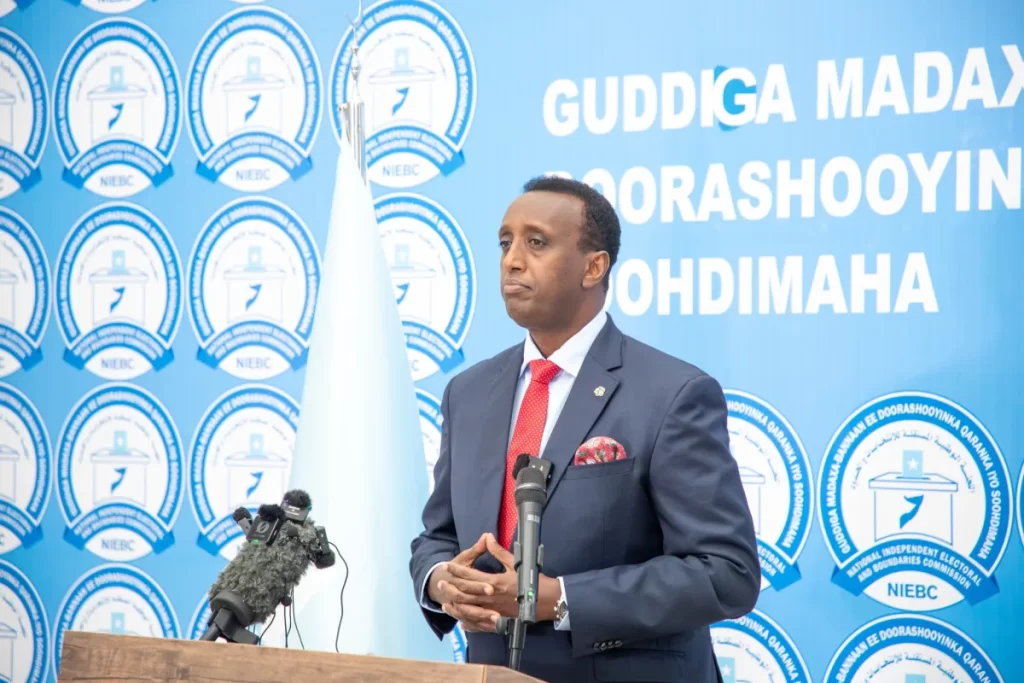
Mogadishu,Somalia- Somalia is entering a period of heightened political tension as opposition figures, federal member state leaders, and the federal government diverge sharply over election timelines, governance structures, and the country’s political future. Attempts are underway by segments of the opposition to establish a major opposition council centered in Kismayo, Jubbaland, but internal disagreements, shifting alliances, and mistrust among leaders have complicated progress.
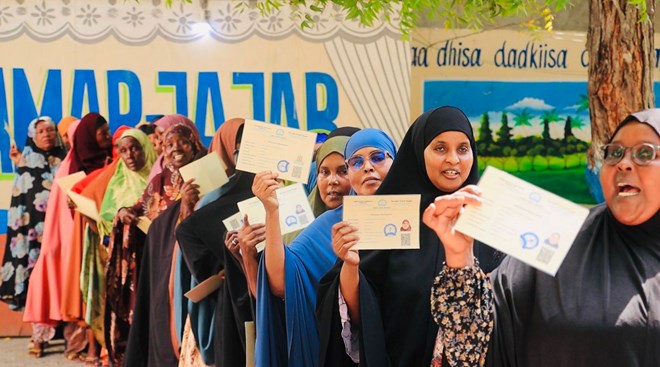
At the same time, President Hassan Sheikh Mohamud is pushing forward with his one-person, one-vote (OPV) electoral agenda, despite strong objections from opposition leaders who argue that the timeline is unrealistic and risks serving as a pretext for term extension. Federal member states aligned with the president have begun preparing for local council elections, further deepening political polarization.
Overall, Somalia faces a fragile and uncertain political landscape characterized by fragmented opposition forces, an emboldened federal leadership, and unresolved disputes over election formats and timelines.
2. Background: Opposition Preparations for Kismayo Conference
Opposition forces have initiated efforts to convene a major political conference in Kismayo, capital of Jubbaland, with the goal of establishing an extensive nationwide council aimed at countering the policies of the federal government. Preparatory meetings have taken place in Mogadishu, including a recent gathering led by the Salvation Council chaired by former President Sheikh Sharif Sheikh Ahmed.
Key developments include:
-
Sheikh Sharif’s leadership role through the Salvation Council (Golaha Badbaadada).
-
Opposition coordination meetings held in Mogadishu earlier this month.
-
Return of Jubbaland President Ahmed Madobe and Puntland President Said Deni from the UAE to begin organizing the upcoming conference in Kismayo.
This conference is intended to consolidate opposition forces into a unified political bloc, though unity remains elusive.
3. Internal Divisions Within the Opposition
Despite their shared opposition to President Hassan Sheikh, rival leaders are struggling to agree on the structure and membership of the proposed council. Deep mistrust persists, particularly regarding the potential inclusion of former President Mohamed Abdullahi Farmaajo.
Key points of contention:
-
Debate over Farmaajo’s participation:
-
Figures such as Hassan Ali Kheyre, Abdirahman Abdishakur, Mohamed Hussein Roble, and Said Deni oppose Farmaajo’s involvement.
-
They argue that Farmaajo was involved in past abuses and wrongdoing, and therefore should not be part of the leadership of a new opposition front.
-
Some view Farmaajo as more problematic than the current president, undermining any unified stance.
-
-
Ideological and personal rivalries are resurfacing, preventing the opposition from forming a coherent strategy.
-
Lack of a shared political program beyond the common goal of removing President Hassan Sheikh.
These divisions threaten the viability of the planned Kismayo council, raising questions about its potential influence or longevity.
4. Federal Government’s Position: Push for One-Person, One-Vote Elections
President Hassan Sheikh Mohamud remains committed to implementing OPV elections, presenting this as a pathway toward democratic progress and political stabilization. However, opposition leaders strongly dispute this approach.
Opposition objections to OPV in this term:
-
Time constraints: The president has less than six months remaining in his current mandate, making OPV logistically unfeasible.
-
Suspicion of term extension:
Many believe Hassan Sheikh is intentionally pushing an impossible timeline in order to justify extending his presidency. -
Security and resource limitations that make OPV difficult in many regions.
Thus, the debate over OPV has become a central point of political contention and a catalyst for opposition mobilization.
5. Government-Aligned Regional Administrations Convene in Villa Somalia
While the opposition struggles to unify, President Hassan Sheikh is reinforcing alliances with friendly regional leaders.
A significant closed-door meeting was held at Villa Somalia, attended by:
-
Ahmed Abdi Kariye (Galmudug)
-
Abdi Aziz Laftagareen (Southwest)
-
Ali Gudlaawe (Hirshabelle)
Agenda of the Villa Somalia meeting:
-
Planning local council elections next month in areas under their control.
-
Discussing election formats and timelines.
-
Addressing complaints about the JSP Party’s management of the electoral process.
-
Some leaders expressed concerns about dominance or lack of transparency.
-
This meeting demonstrates the federal government’s strategy of advancing electoral processes in aligned states, strengthening its political legitimacy while the opposition remains divided.
6. Banadir Regional Council Delays and Their Impact
The Banadir Regional Council elections—intended by the president to showcase progress toward OPV—have experienced repeated delays. These setbacks have undermined the government’s narrative of momentum and reform.
Consequences of the delays:
-
Reduced public confidence in the government’s capacity to deliver electoral reforms.
-
Increased skepticism from the opposition, who cite these delays as proof that OPV cannot be achieved within the current term.
-
Growing political uncertainty in Mogadishu.
These delays have weakened the government’s position while simultaneously failing to empower a fractured opposition.
7. Overall Assessment: A Nation Facing Political Fragmentation
Somalia’s political environment is marked by:
A. Fragmentation of the Opposition
-
No unified leadership.
-
Tensions between major political figures.
-
Lack of a common platform beyond anti–Hassan Sheikh sentiment.
B. Federal Government Advancing a Controversial Electoral Agenda
-
OPV remains the centerpiece of the president’s political strategy.
-
Critics believe the process is unrealistic and politically motivated.
C. Intensifying Regional Alignments
-
Government-loyal states coordinating with Villa Somalia.
-
Jubbaland and Puntland aligning with opposition initiatives.
D. Increased Risk of Political Crisis
-
If the Kismayo conference fails, the opposition may lose credibility.
-
If OPV elections are forced prematurely, instability could worsen.
Somalia is thus navigating a precarious political moment with no clear path to consensus.
8. Conclusion
Somalia is experiencing a complex and volatile political phase as competing factions—both within the federal government and the opposition—struggle to assert control over the country’s electoral and governance future. The proposed Kismayo conference reflects the opposition’s desire to counter the president’s agenda, but internal discord threatens its success. Meanwhile, President Hassan Sheikh continues to push forward with planned OPV elections, despite logistical challenges and fierce criticism.
Unless a negotiated political settlement is reached, Somalia may face further division, institutional paralysis, and heightened instability in the coming months.
Telegaraf Report