Mogadishu,Somalia–
Recent information indicates that President Hassan Sheikh Mohamud has intensified military and security preparations in the final weeks of his current term, which is set to expire on May 15. These measures include significant changes within the armed forces, where several senior officers have been dismissed or reassigned.
These actions reportedly followed intelligence suggesting that opposition groups have begun mobilizing and attempting to establish contacts with officers within the Somali National Army, potentially to challenge the government once the president’s term ends.
At the same time, security in the capital, Mogadishu, has been notably tightened. Entry points into the city are under increased control, and heavily armoured vehicles have been observed patrolling major areas, signalling heightened alertness by government forces.
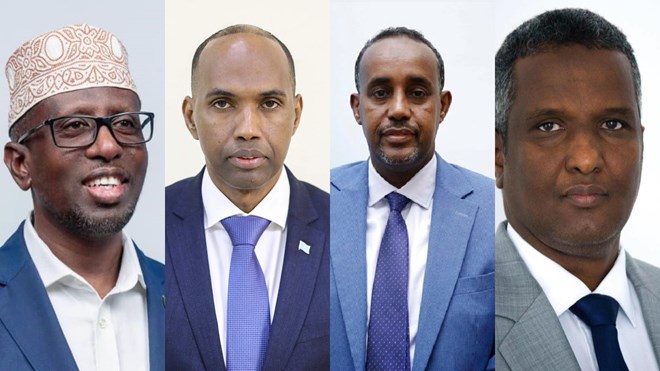
On the political front, several prominent opposition figures—many of whom share clan ties with the president and originate from Mogadishu—have escalated their activities. These include former president Sharif Sheikh Ahmed, former prime ministers Hassan Ali Khaire and Mohamed Hussein Roble, opposition leader Abdirahman Abdishakur Warsame, and famer chief intelligence Sanbaloolshe).
These figures reportedly held a meeting at the residence of Sharif Sheikh Ahmed in Mogadishu to coordinate opposition against President Hassan Sheikh. Some members of this opposition bloc are believed to have backing from the United Arab Emirates, with the aim of removing the current president from power.
Despite these pressures, President Hassan Sheikh appears to be preparing for a transition through elections. Plans are underway to conduct one-person, one-vote elections across several regions. Voting is scheduled to begin on April 28 in Baidoa, followed by elections in Galmudug and Hirshabelle on May 13. Additional elections are expected in June in northeastern regions and in the Gedo region of Jubaland.
Public sentiment in Mogadishu appears largely unsupportive of the opposition coalition, often referred to as the “rescue group.” Many residents view them as self-interested actors who have contributed little to national progress. Instead, there is significant public support for maintaining the relative stability and security the capital has experienced over the past three years, which many attribute to the current administration.
President Hassan Sheikh is widely regarded by his supporters as a leader who has made tangible progress in Somalia’s recovery. One of the most discussed developments is the advancement of oil exploration, with drilling activities reportedly beginning offshore in the Galmudug region. This has raised hopes among citizens for future economic growth and resource development.